Benidorm.org: two decades building a city’s digital platform.
Since 2008, Paginar has worked with Benidorm City Council, alongside Telefónica España, to develop, maintain and evolve a multiportal platform that connects public information, municipal services and the city’s digital ecosystem.

For two decades, our work with Benidorm City Council has been the continuous evolution of a digital public-service platform. The latest version, now live, updates the experience for residents, visitors and municipal teams; consolidates Drupal 11; and integrates practical artificial-intelligence capabilities into content management.
Services
We organise a digital product’s information, navigation and flows so people can understand it and achieve their goals. We make tasks clear, straightforward and appropriate to their context of use.
We shape interfaces through hierarchy, typography, colour and components. We design screens and interaction states that reflect the brand’s identity, with attention to readability and accessibility.
We implement content management systems suited to a product’s editorial needs. We organise content types and publishing workflows to make updates and maintenance easier.
We turn designs and user journeys into functional interfaces. We build components and applications for each environment, with attention to performance, accessibility and continuity between design and implementation.
We develop the services, APIs and logic behind digital products. We connect data and systems to support functionality and make the solution easier to evolve.
We design and implement AI systems connected to an organisation’s knowledge and services. We combine information retrieval, agents and evaluation mechanisms according to each product’s needs.
We support the operation and evolution of digital products. We resolve issues and make technical and functional adjustments to maintain service continuity.
Platform evolution
Benidorm is a city with a diverse and highly visible public agenda. Its digital presence has to make institutional information, municipal services, communications, employment, Film Office activity, tourism-related information and smart-city initiatives easier to find and use. It must do so for different audiences, in several languages and across devices—while giving many municipal teams the autonomy to keep their own information current.
The ambition was never limited to launching a website. It was to create a digital foundation that could keep pace with the city: one capable of incorporating new services, editorial needs, regulations and technologies without losing clarity for the people who use it every day.
Our relationship with Benidorm City Council began in 2008. Over time, we helped turn an initial collection of sector-specific websites into an integrated multiportal solution. Instead of maintaining separate technology stacks and disconnected editorial processes, the City Council gained a shared content platform, common governance and a reusable set of capabilities.
The platform brings together a range of municipal touchpoints—including the citizen portal, communication, Film Office and European Funds sites—and is prepared to incorporate further initiatives such as beaches and open data. Each portal can serve its own audience and content priorities, while drawing on the same core architecture, shared functionality and editorial principles.
This model makes the platform more coherent for the public and more efficient for the organisation. Improvements to the core can be extended across the ecosystem; information can be managed from a unified repository; and teams can publish closer to their areas of responsibility through defined roles and workflows.
The latest evolution was approached as a careful improvement of an established public service, not as a cosmetic redesign. We reviewed the information architecture and interface patterns of the portals to make navigation, content discovery and access to relevant municipal information more direct. The visual language was updated to create a consistent, responsive experience while allowing each portal to retain its own context.
The work also extended behind the interface. We improved the editorial experience for the departments that publish content, with clearer administration tools, contextual guidance and flexible page structures for the different municipal areas. This gives teams greater control over how they present their services and activities while helping maintain quality standards across the platform.
Artificial intelligence was incorporated as a practical capability within that evolution. It supports content discovery, helps with translation and assists editors with accessibility validation and image-related SEO tasks. Rather than being a separate product, it works inside the content workflow, reducing repetitive work and helping teams preserve quality at scale.
The current platform is based on Drupal 11 and a decoupled architecture that separates content, APIs and front-end applications. This makes it possible to evolve each layer independently, share data and services more easily, and introduce new digital touchpoints without rebuilding the entire ecosystem.
The migration was planned as a continuity exercise: preserving existing content, functionality, user accounts and URLs while renewing the underlying platform. Alongside the core upgrade, the solution provides capabilities for multilingual publishing, automated translation support, editorial accessibility validation, web analytics and integration with the Electronic Office, the city’s Smart Destination platform and WhatsApp.
Accessibility is treated as a platform responsibility, not as a final-stage check. It informs the public interfaces as well as the editorial workflows, helping the City Council’s distributed publishing teams produce clearer, more inclusive content from the start.
Two decades of collaboration have created a deep understanding of the platform, the City Council’s operating model and the evolving needs of Benidorm. That continuity helps us move from a new requirement to an informed solution quickly: we can protect what already works, anticipate dependencies across the ecosystem and make changes with the long-term health of the platform in mind.
Working alongside Telefónica España, Paginar combines UX and development expertise throughout that evolution. The relationship is not limited to maintaining software: it is a sustained partnership that turns ongoing learning into better digital services for the city.
The result
Benidorm now has a modern, accessible and scalable multiportal platform that gives its digital presence a common foundation while allowing municipal services and initiatives to evolve independently. It is a platform built for the present needs of a connected city—and for the next question, service or audience that the city needs to serve.
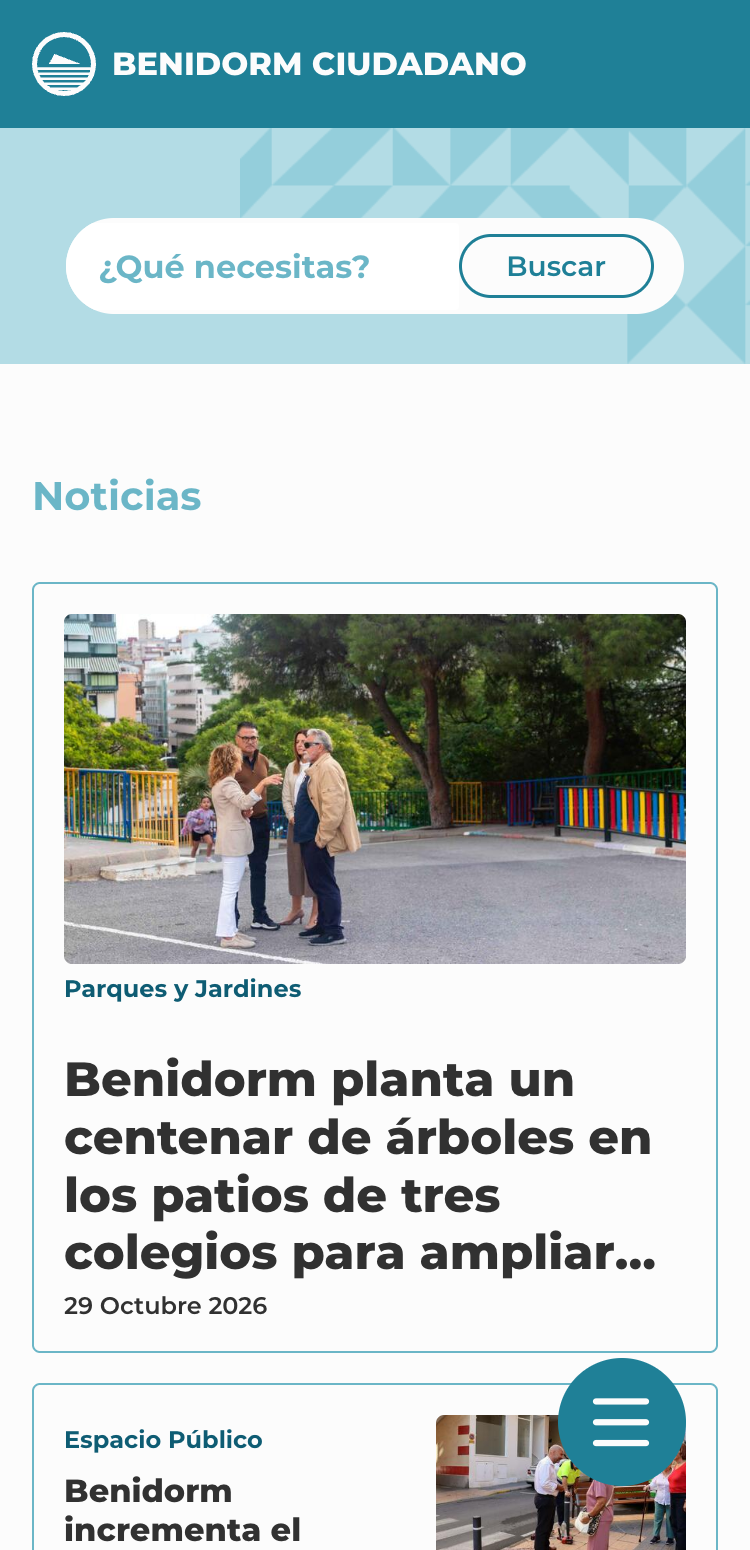
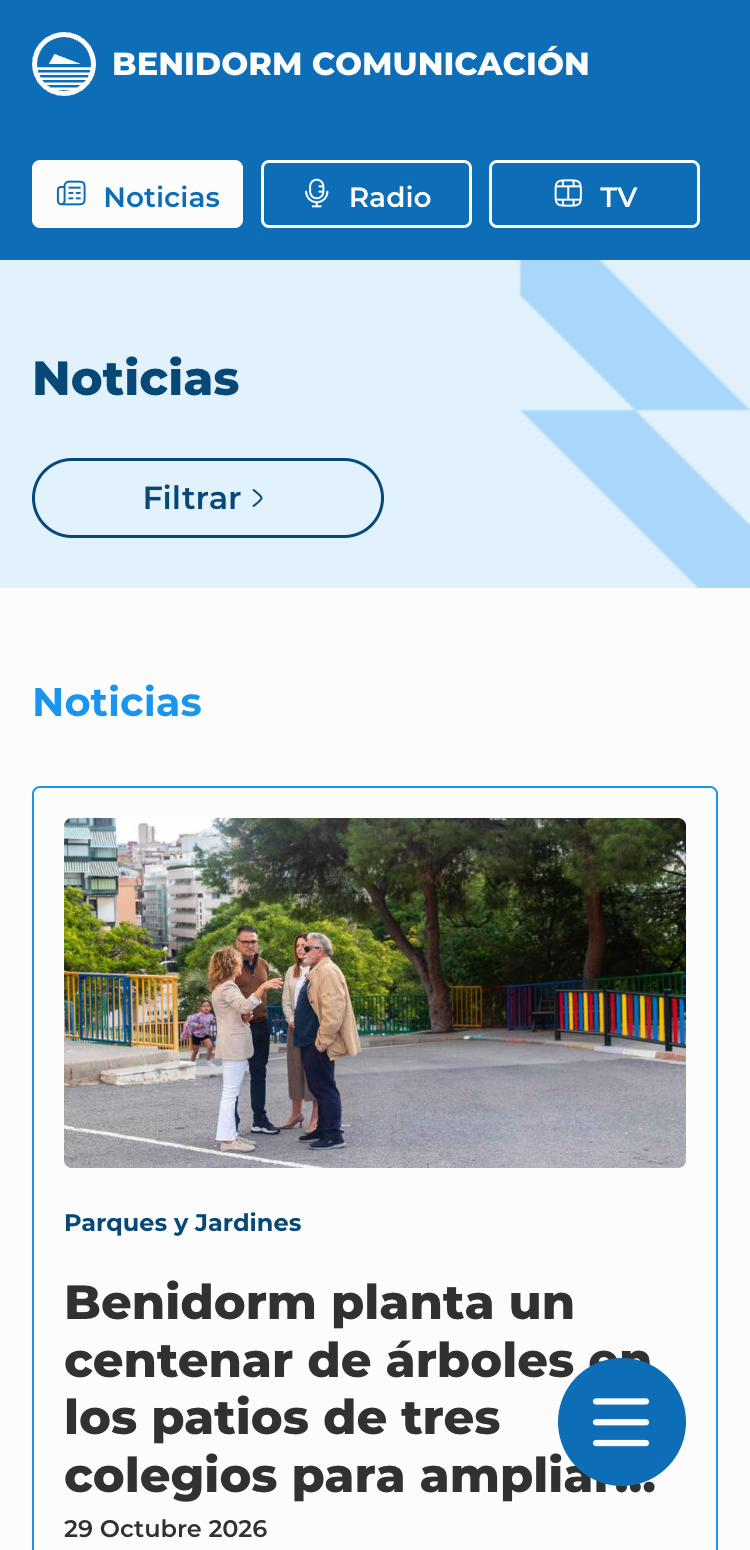
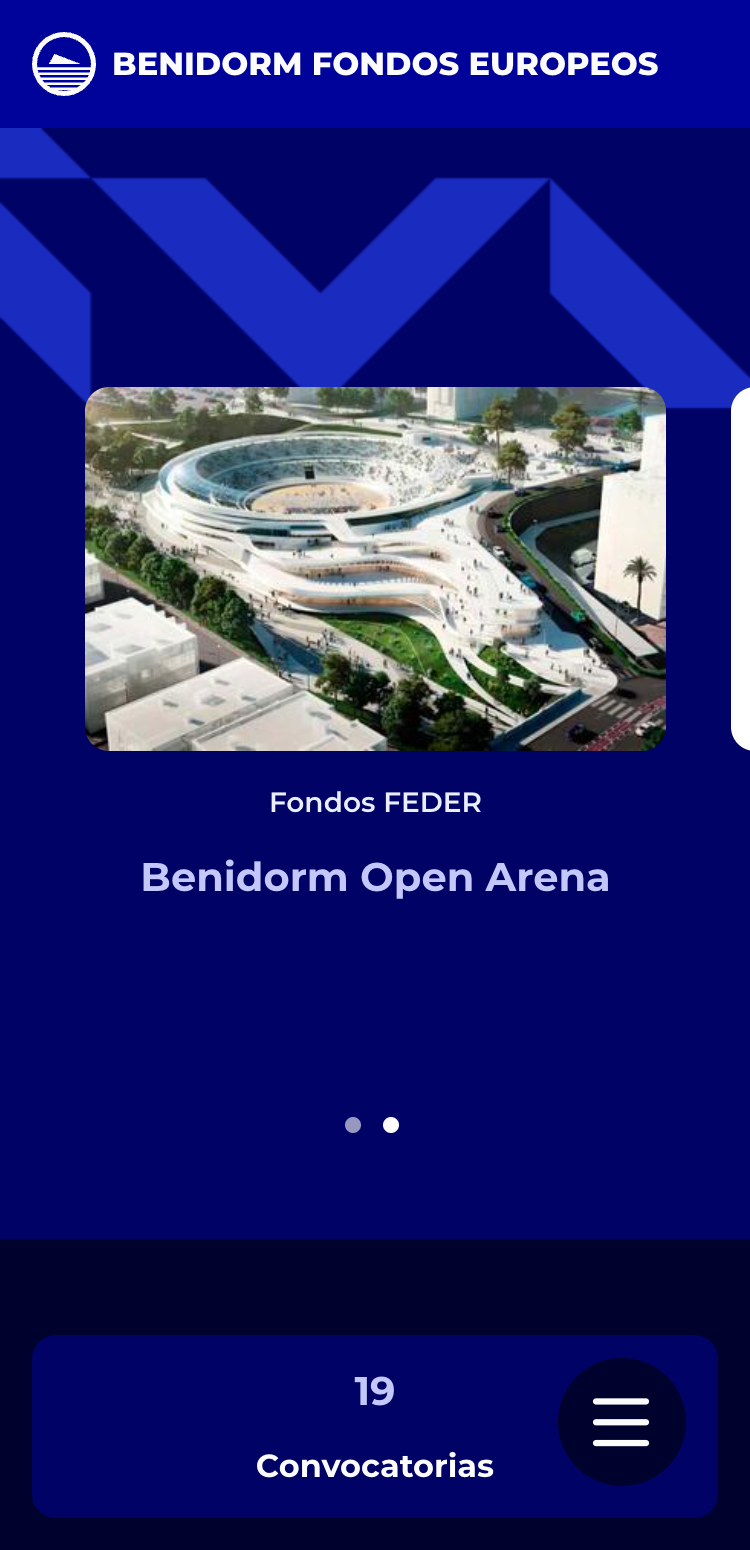
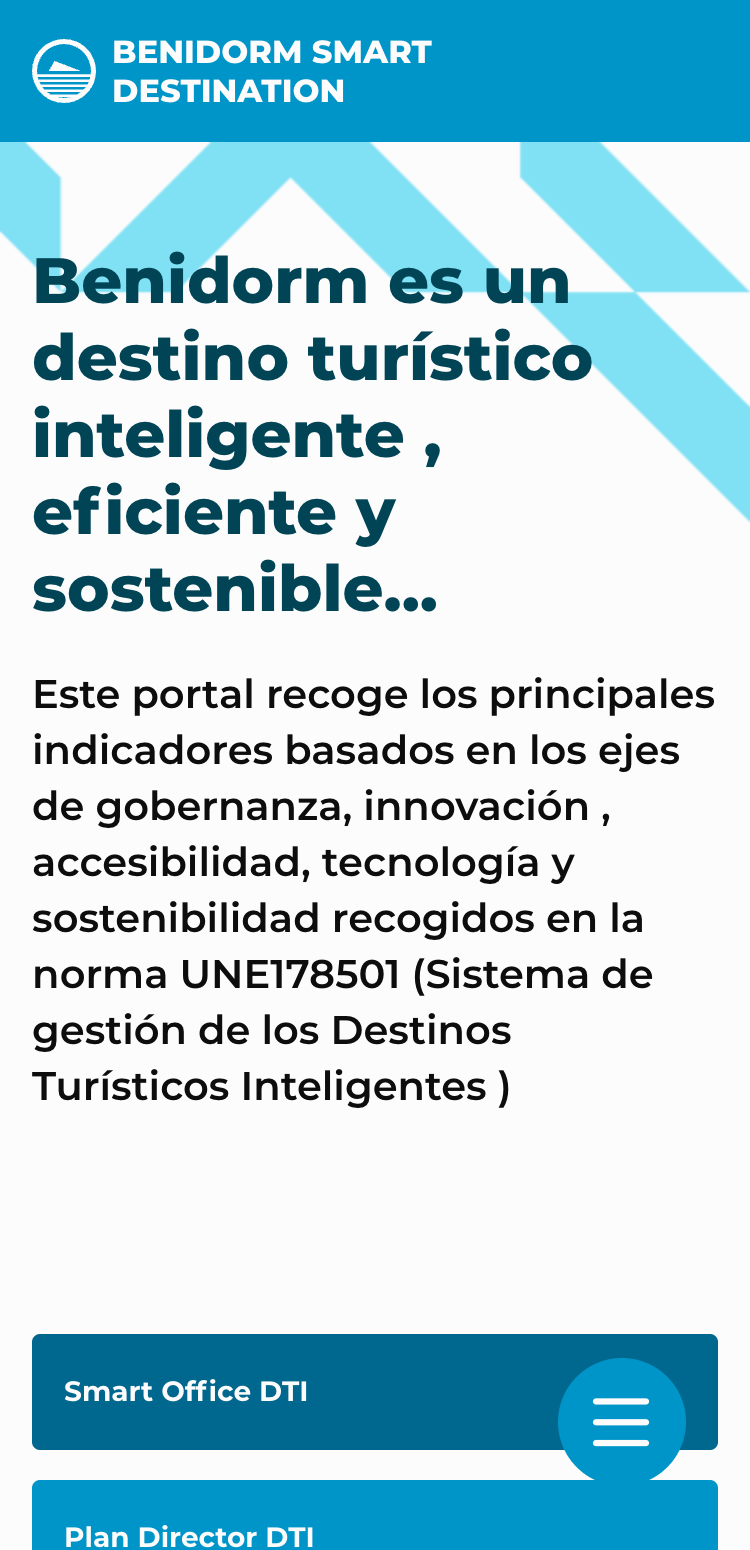
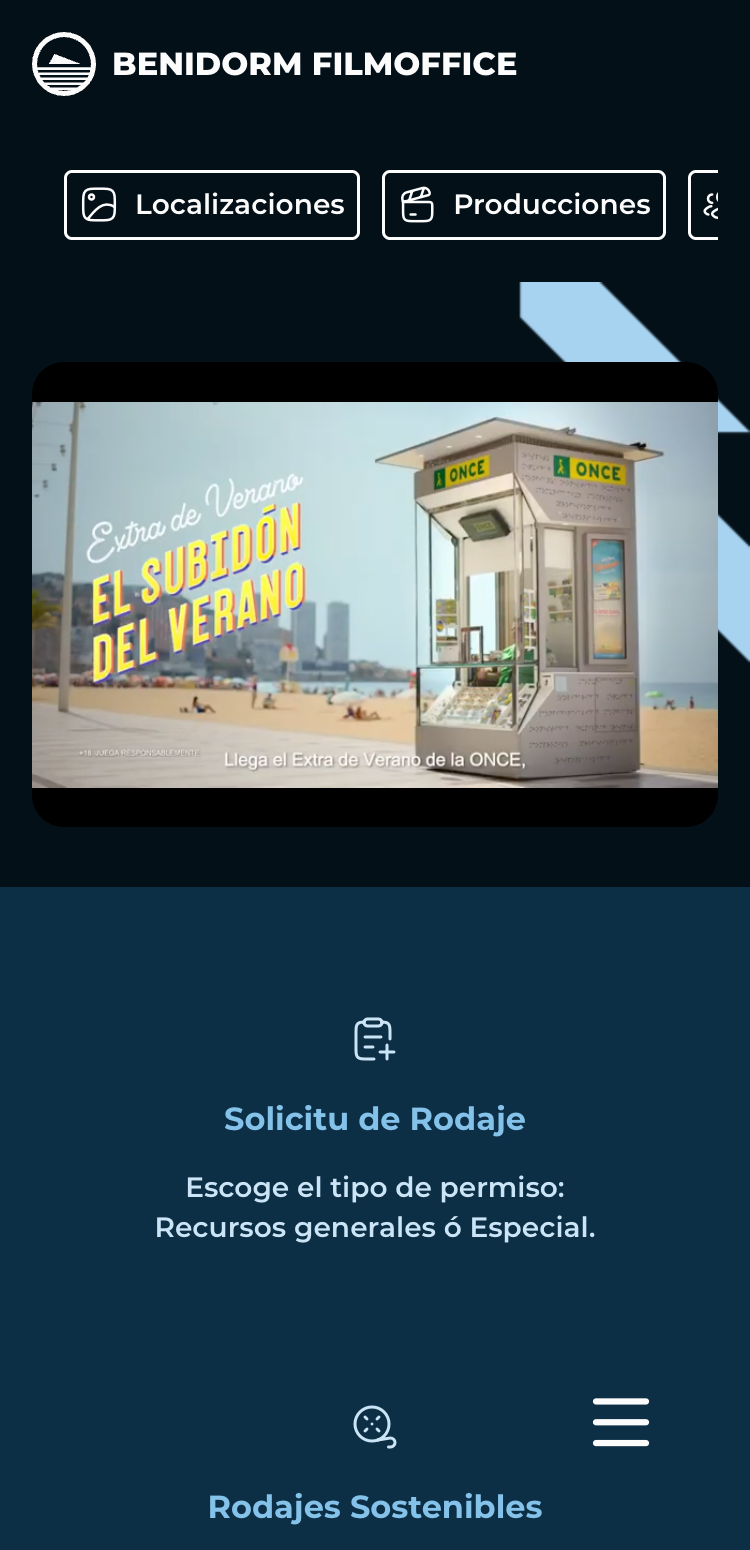
The composition brings together the mobile versions of Benidorm Ciudadano, Comunicación, Film Office, European Funds and Smart Destination: different services evolving on one shared digital foundation.
- Client

- Partner
