RTVE Play: a new way to experience RTVE content.
An end-to-end project spanning strategy, research, design and technology for web, mobile and connected TV.
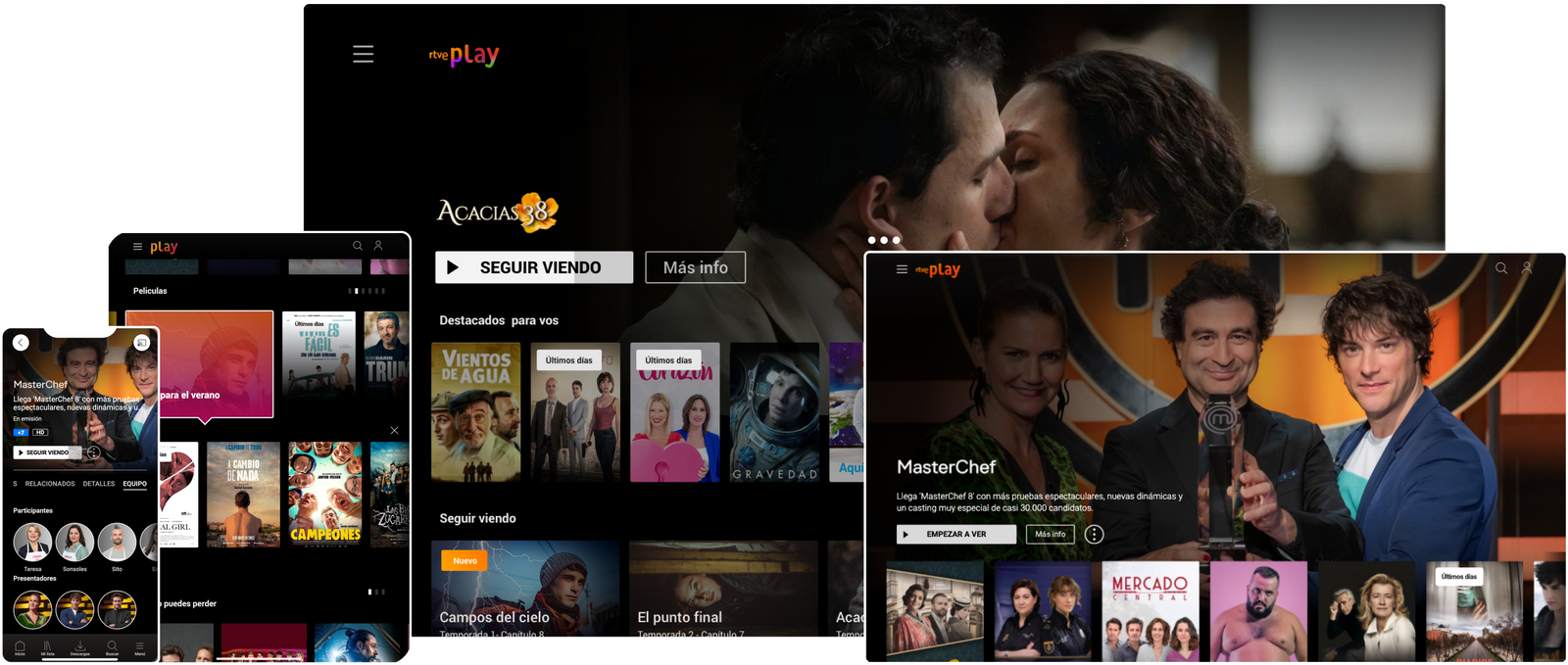
UI Design across web, mobile and CTV platforms
Designing RTVE Play’s user interface for web, mobile and Smart TV/HbbTV apps. The aim was to create a smooth, easy-to-use experience that made content discovery and access simple from any device. We analysed audience behaviour and optimised navigation for each platform, making it easy to access live streams, on-demand content and interactive features from the web, the mobile app or the TV. Functionality and simplicity were prioritised so people could search, explore and enjoy content through a consistent experience across web, mobile and CTV.
RTVE needed a consistent experience for discovering and enjoying its catalogue across web, mobile and connected TV. Working with RTVE and Telefónica España, we connected strategy, research and design with a design system and a front-end component library that support the platform’s evolution.
Services
We align business goals with people’s needs. We define priorities, scope and product criteria to guide design and development towards a shared vision.
We investigate people’s needs, motivations and behaviours alongside the business context. We combine qualitative and quantitative methods to identify opportunities and inform design decisions with evidence.
We organise a digital product’s information, navigation and flows so people can understand it and achieve their goals. We make tasks clear, straightforward and appropriate to their context of use.
We shape interfaces through hierarchy, typography, colour and components. We design screens and interaction states that reflect the brand’s identity, with attention to readability and accessibility.
We create interactive representations of a product to explore and evaluate how it works before development. Prototypes help test ideas and user journeys and build a shared understanding across teams.
We organise visual foundations, components and interaction patterns into a shared system. We document how to use them so design and development teams can build and evolve consistent interfaces.
We turn designs and user journeys into functional interfaces. We build components and applications for each environment, with attention to performance, accessibility and continuity between design and implementation.
We integrate video and audio playback into the product experience. We connect players, content and access services according to each platform’s needs.
Work process
RTVE Play is the digital gateway to RTVE’s TV and radio offering. RTVE is Spain’s public media group and one of Europe’s leading public broadcasters. In an ecosystem where content competes for attention across every screen, the platform needed to provide a clear, welcoming and consistent experience for a broad and diverse audience.
The challenge was not simply to refresh an interface. It was to rethink how people discover, understand and enjoy a broad audiovisual offering: from someone looking for a specific programme on the web to someone continuing playback on a mobile device or navigating from the sofa with a remote control.
Paginar worked alongside the RTVE and Telefónica España teams throughout that journey. The engagement covered everything from the initial consulting work to user research, experience design, usability testing and the development of a front-end component library. The goal was clear: to create a shared experience across every platform while laying a solid foundation for the product to keep evolving.
The starting point
RTVE Play brings together television and radio content, live streams, linear programming and an extensive on-demand offering. The breadth of that catalogue was also one of its greatest challenges: it needed to be easy to explore without oversimplifying it or requiring audiences to learn a different logic on each device.
That is why we approached the project as a product system, not as a collection of screens. Every decision — from the way content was organised to the behaviour of a component — had to contribute to the same brand, navigation and playback experience, whether someone accessed it from the web, a mobile app or a Smart TV.
The work started with product consulting and requirements workshops. These sessions aligned the teams involved, set priorities and translated business, editorial and technical goals into a shared vision of the experience. Before designing, it was important to begin from the same conversation: what the audience needed, what the product had to solve and how each platform should respond.
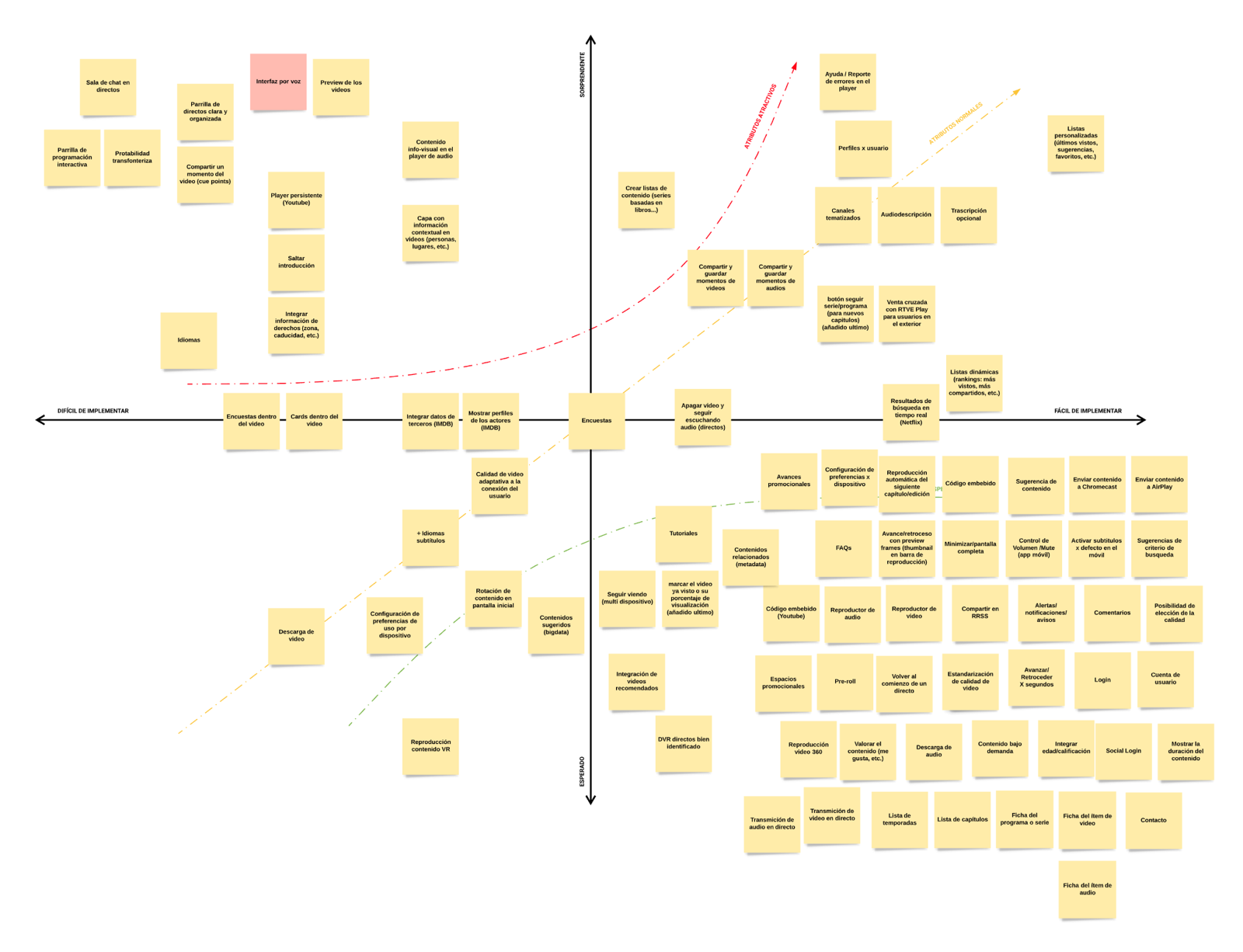
Requirements Workshop
Defining and prioritising application requirements using the Kano model. This approach organises features according to their impact on user satisfaction and their implementation difficulty. The aim was to address the most valuable and feasible capabilities first, balancing audience needs with technical feasibility. The workshop aligned the teams involved, clarified priorities and focused development on the features with the greatest impact on the user experience.
From there, we incorporated the user perspective. We analysed market data, demographics, behaviours, needs and preferences to define profiles representing RTVE Play’s different audience segments. Rather than being a descriptive exercise, these personas became a decision-making tool: they helped assess which content, features and interactions made sense in each usage context.
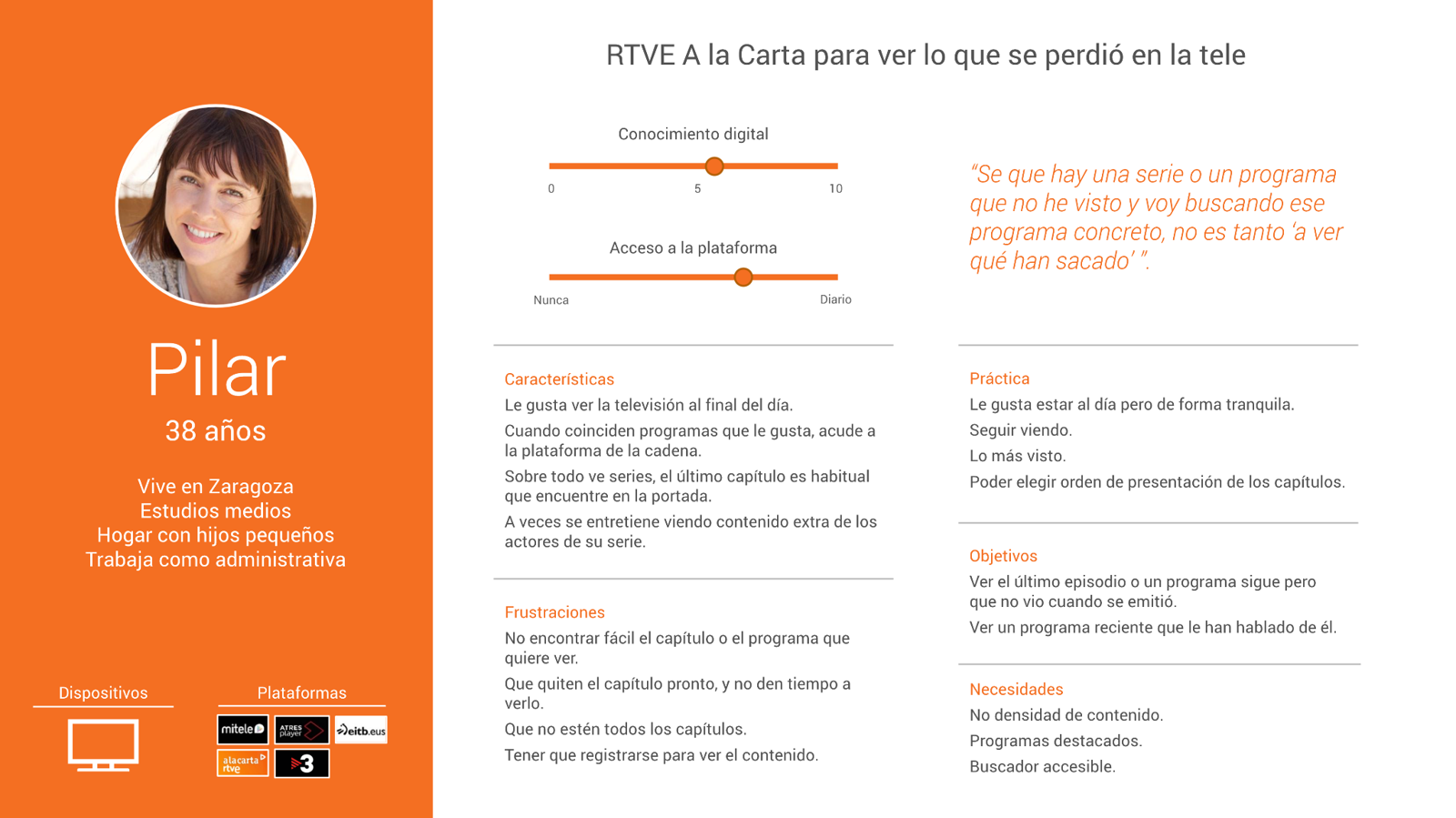
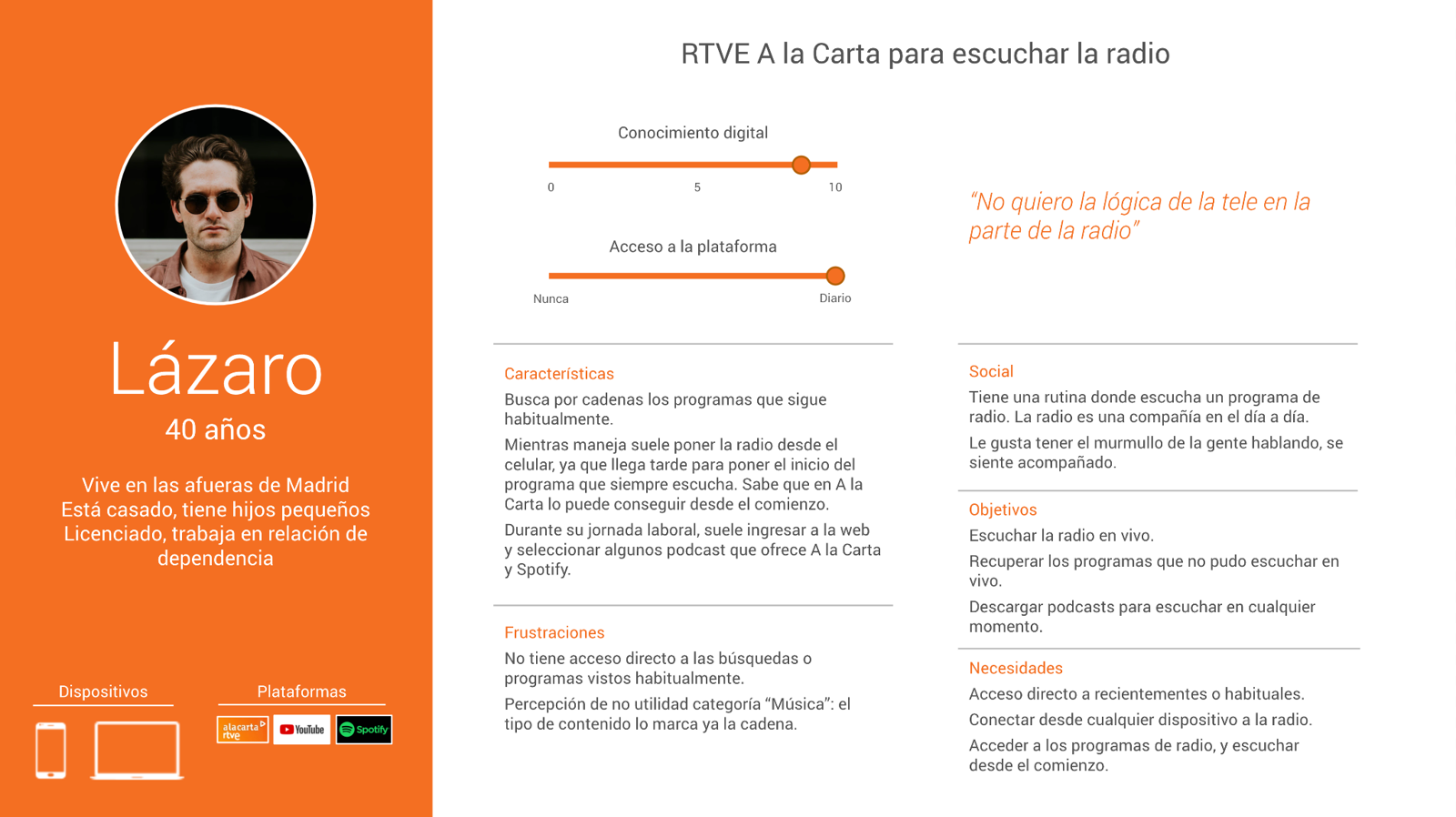
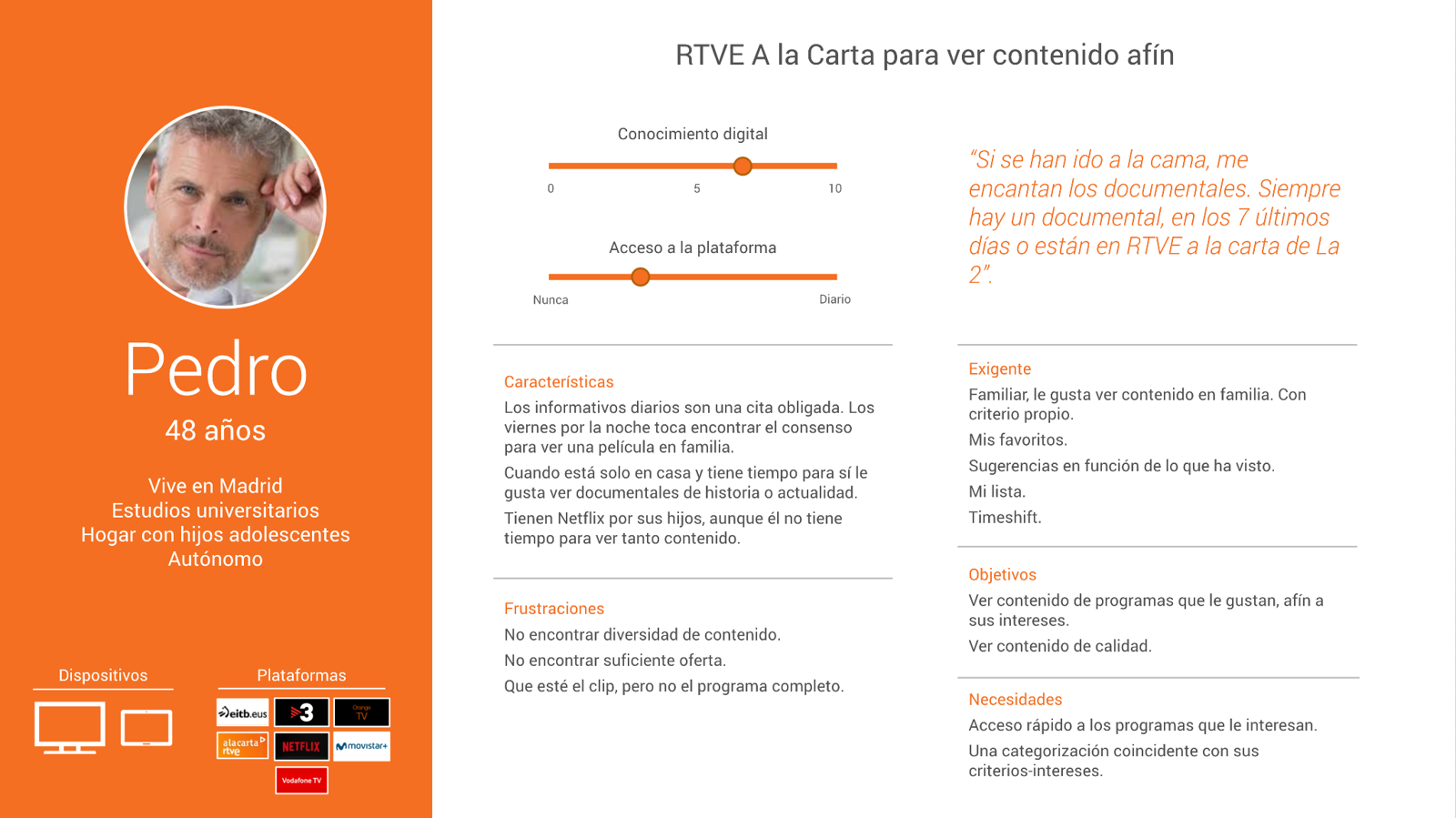
User Persona
Identifying RTVE Play’s target audience and developing user profiles from market research data. The process brought together information on the audience’s demographics, behaviours, needs and preferences. Through this analysis, we developed detailed user profiles representing the different audience segments. These profiles guided design decisions, helping us tailor the app’s features, interface and content to the specific expectations of each group and deliver a more personalised, effective experience.
With these insights, we shaped the information architecture and navigation flows. We organised content around thematic axes and linear programming so that the depth of the catalogue could be explored intuitively. The focus was on helping anyone find their bearings quickly, discover what interested them and move from exploration to playback without friction.
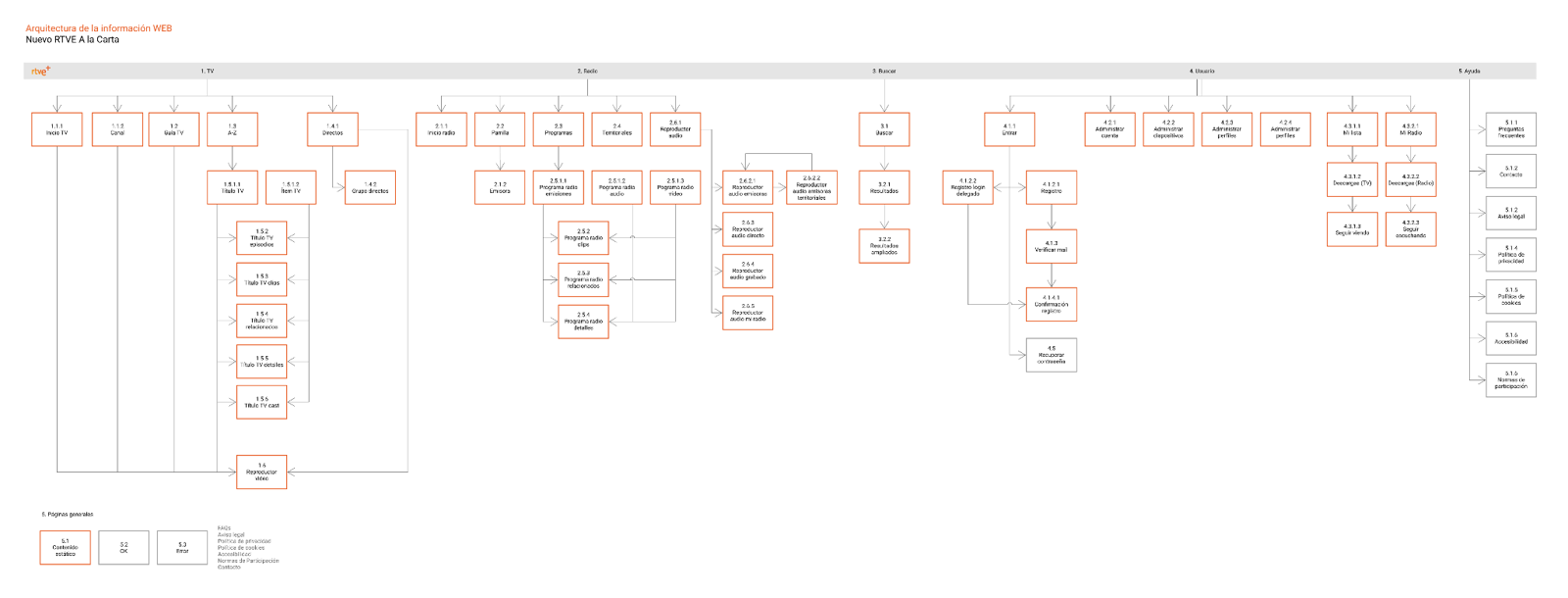
RTVE Play Information Architecture
Designing the app’s information architecture by organising content around key thematic axes and linear programming. The work focused on structuring information in an intuitive, easy-to-navigate way so people could quickly find what they were looking for. The architecture grouped content into clear, logical categories, improved accessibility and enabled smooth navigation across the app’s different sections.
The information architecture led into product and interface design. We designed interactions, screens and patterns for the web app, mobile apps, RTVE Play Radio’s desktop and mobile versions, and Smart TV and HbbTV apps.
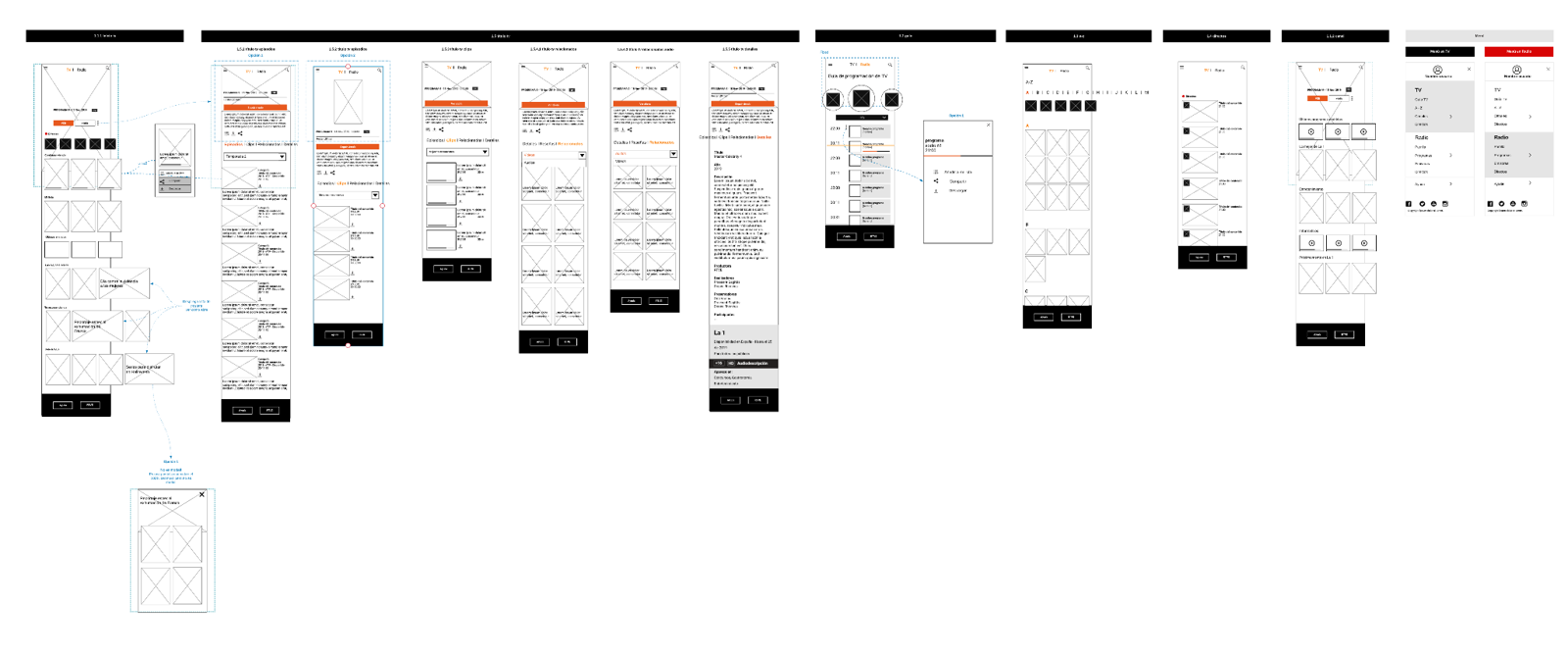
Wireframing
Designing app templates for its different versions and screen sizes — in this case, smartphones. These wireframes served as a blueprint for defining the app’s structure, functionality and user flows. Before development, they made the key elements and interactions clear and helped ensure a smooth, intuitive experience, especially on mobile devices.
This was not about replicating the same screen at different sizes. Each environment called for a specific response: an agile, direct experience on mobile devices; remote-friendly navigation on connected TV; and the ability to explore a broad offering on the web without losing context. The design work respected those nuances while building an RTVE Play experience that felt recognisable at every touchpoint.
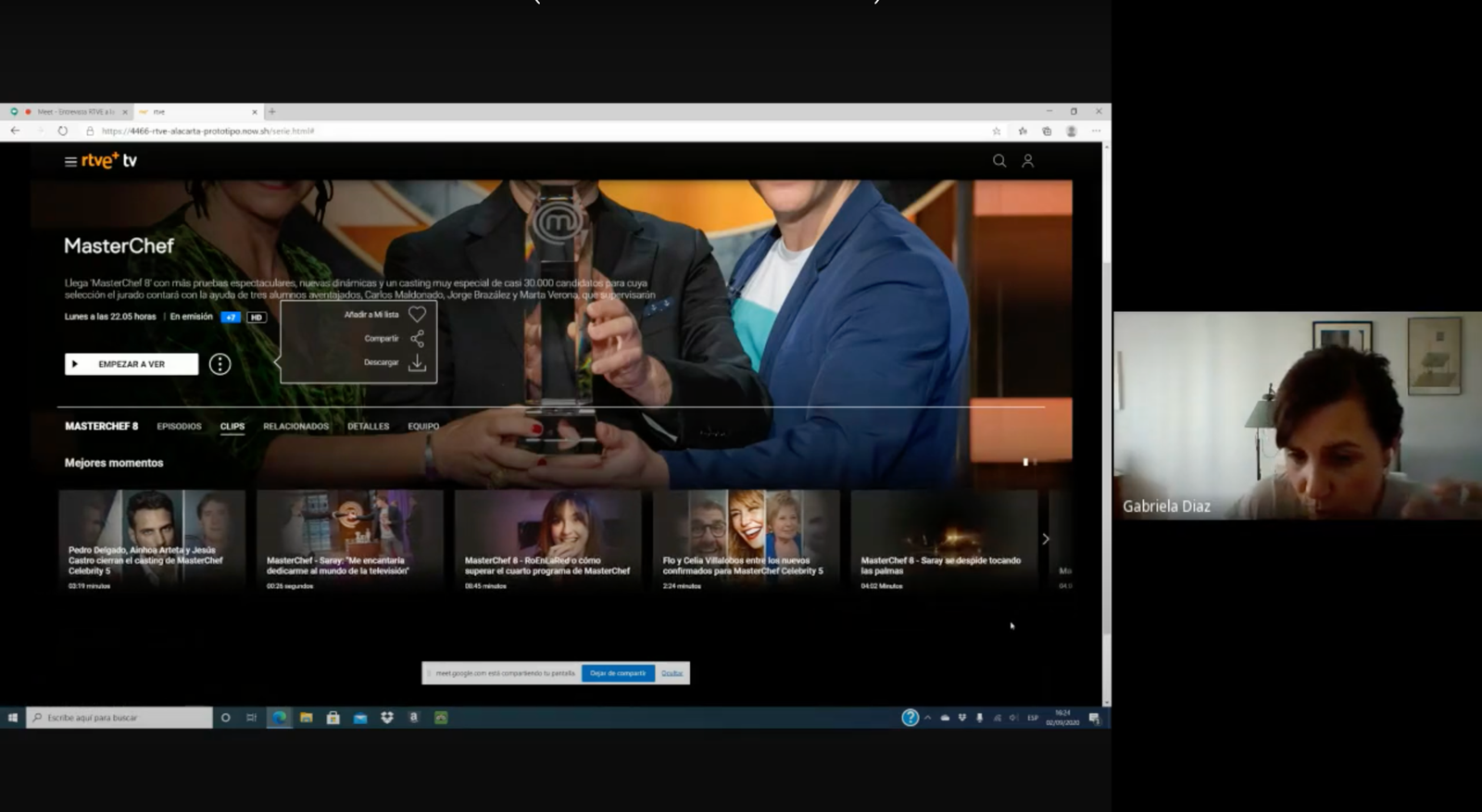
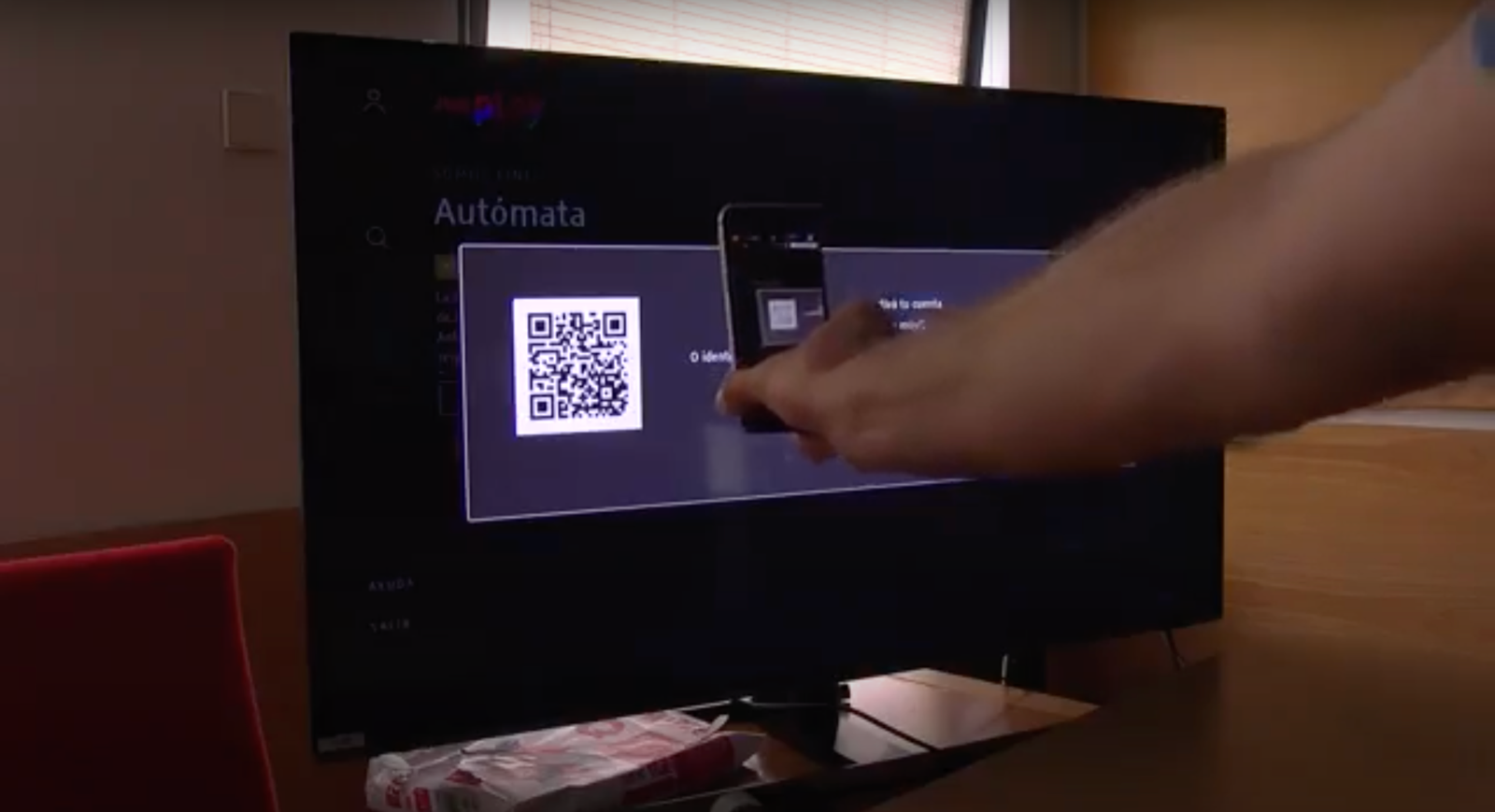
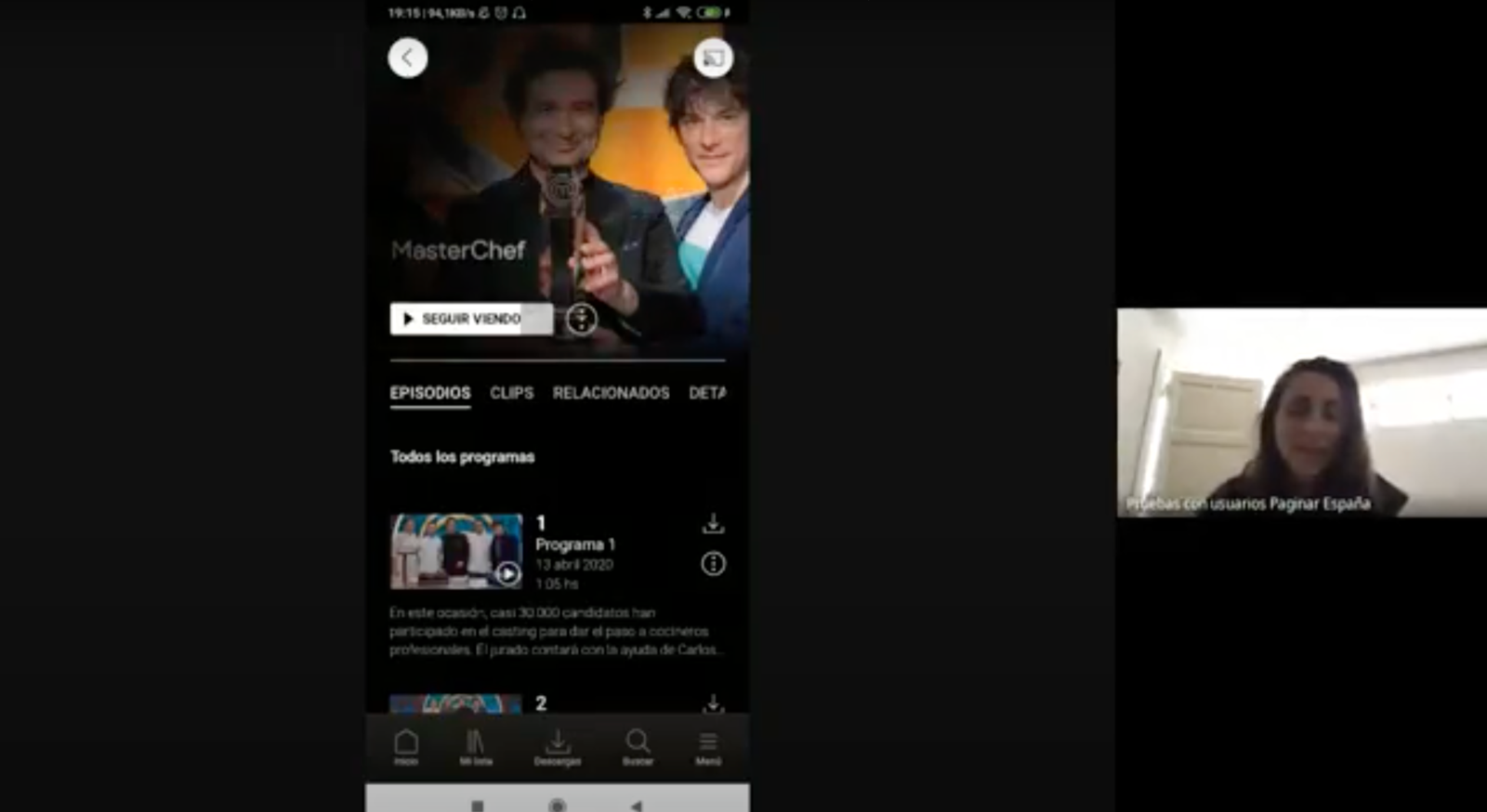
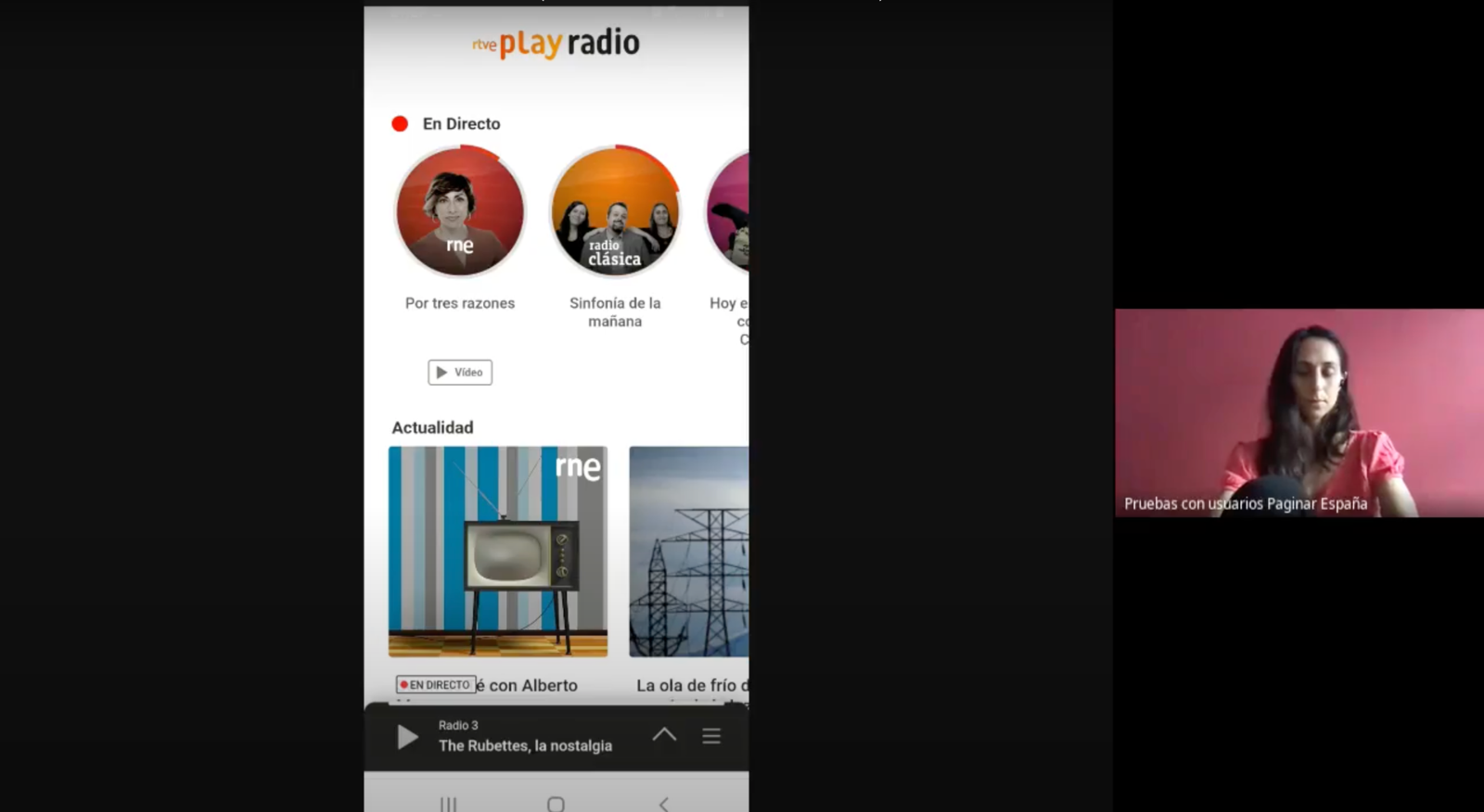
User Research
Conducting user interviews to validate the new designs and proposed interactions across the platform’s different versions through high-fidelity prototypes. The research gathered direct feedback on the app’s usability, functionality and overall user experience. By observing participants’ reactions and analysing their interactions with the prototypes, we identified potential pain points, refined the design and confirmed that the solution met their expectations. This process helped optimise the interface, making it more intuitive and effective across platforms.
The findings from this validation informed the final refinements before production and helped consolidate a consistent experience across web, mobile and connected TV.
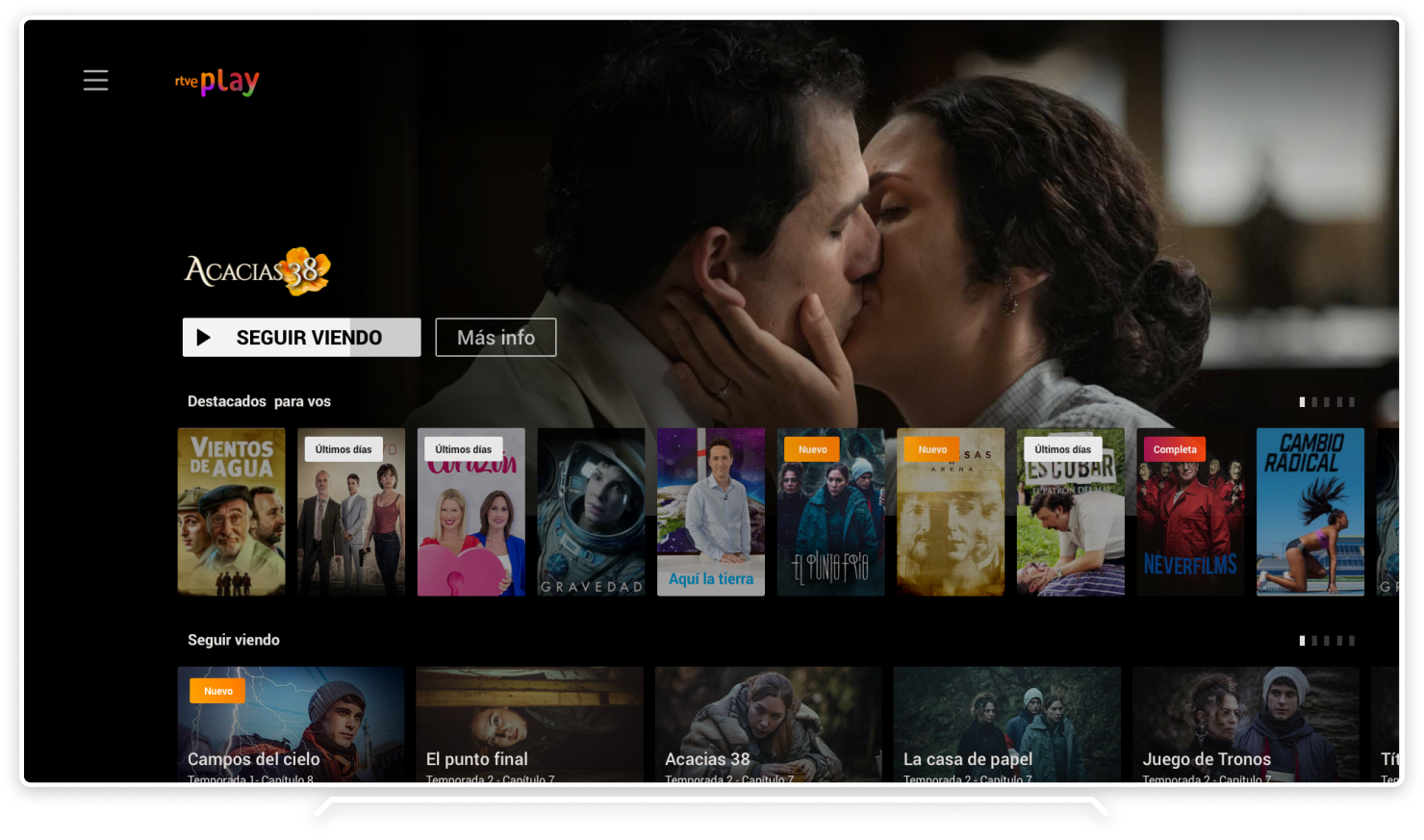
UI design for RTVE Play’s Smart TV and HbbTV apps.
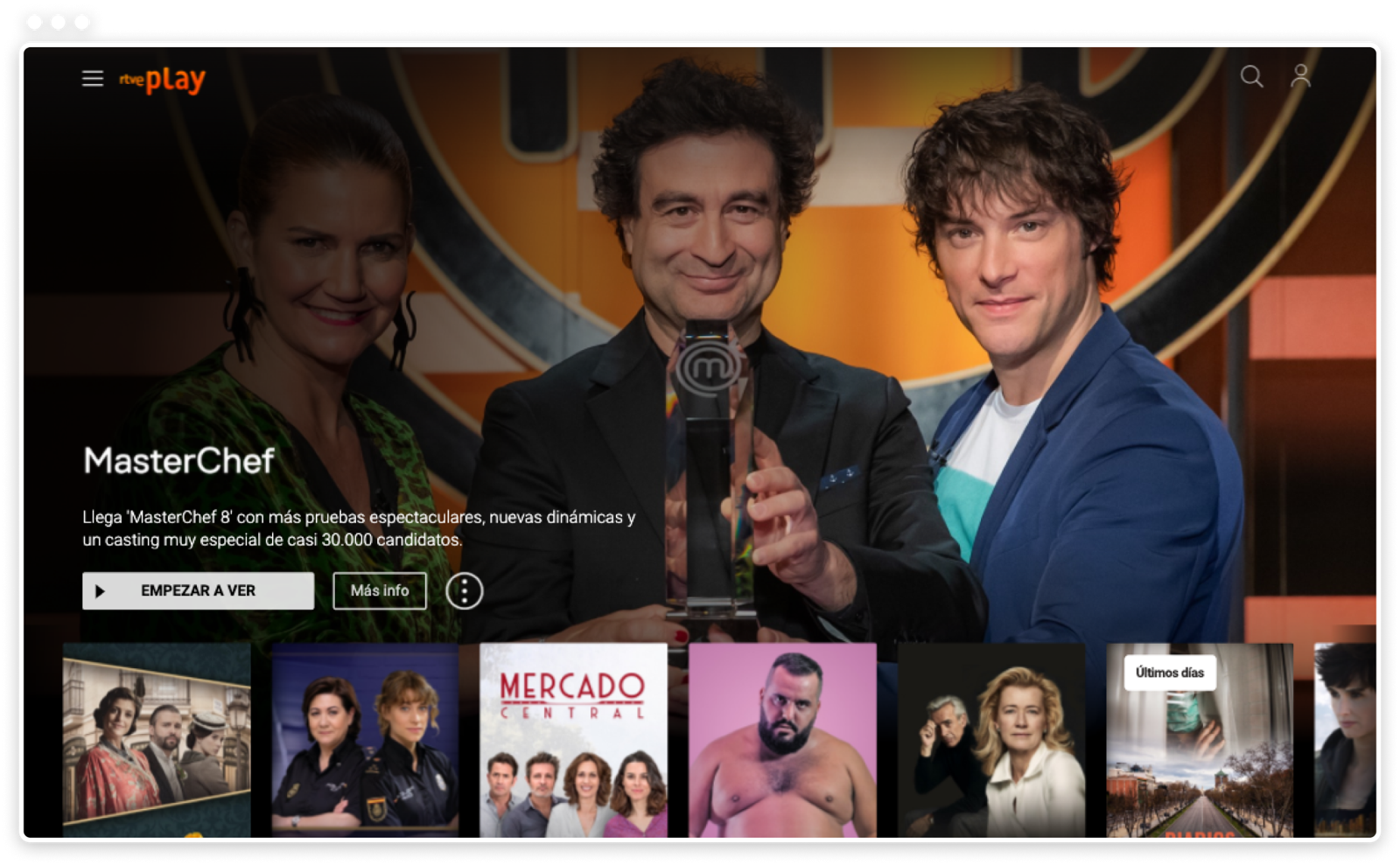
UI design for the RTVE Play web app.
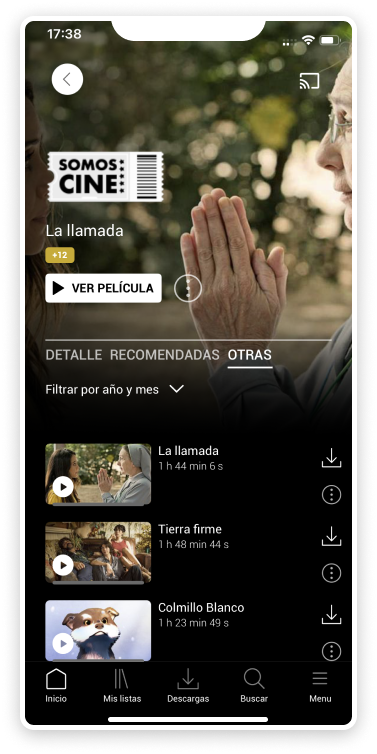
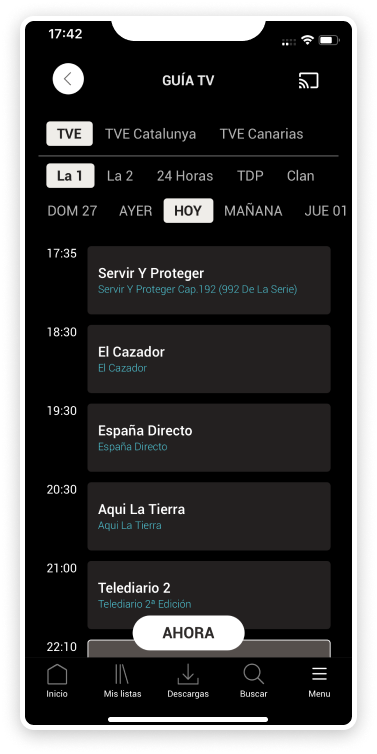
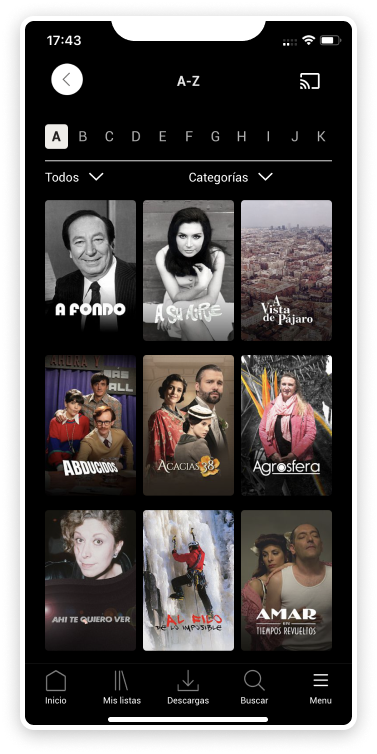
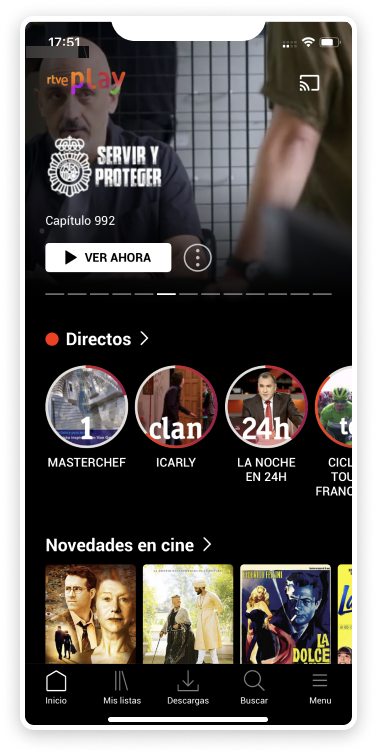
UI design for the RTVE Play mobile app.
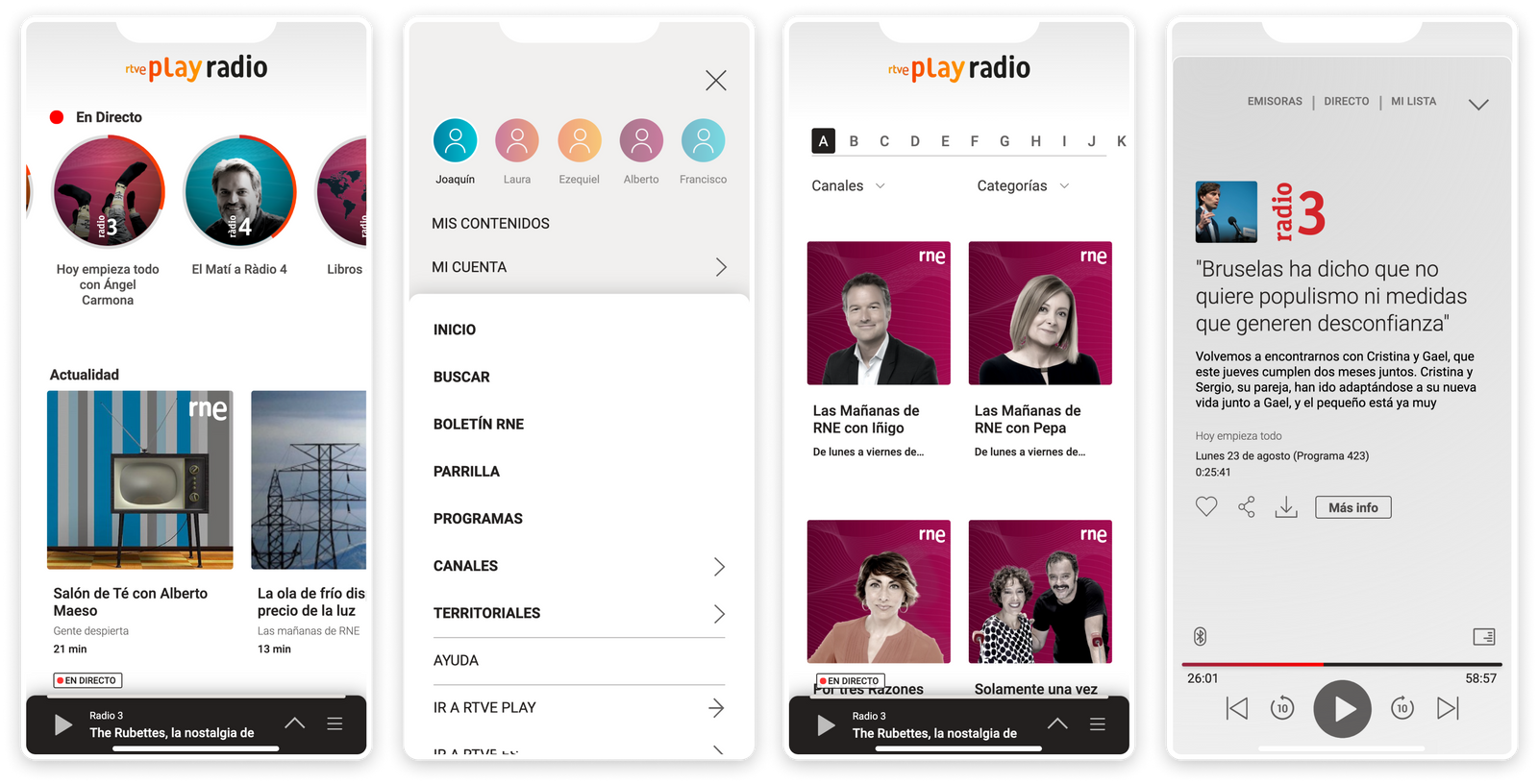
UI design for RTVE Play Radio’s mobile app.
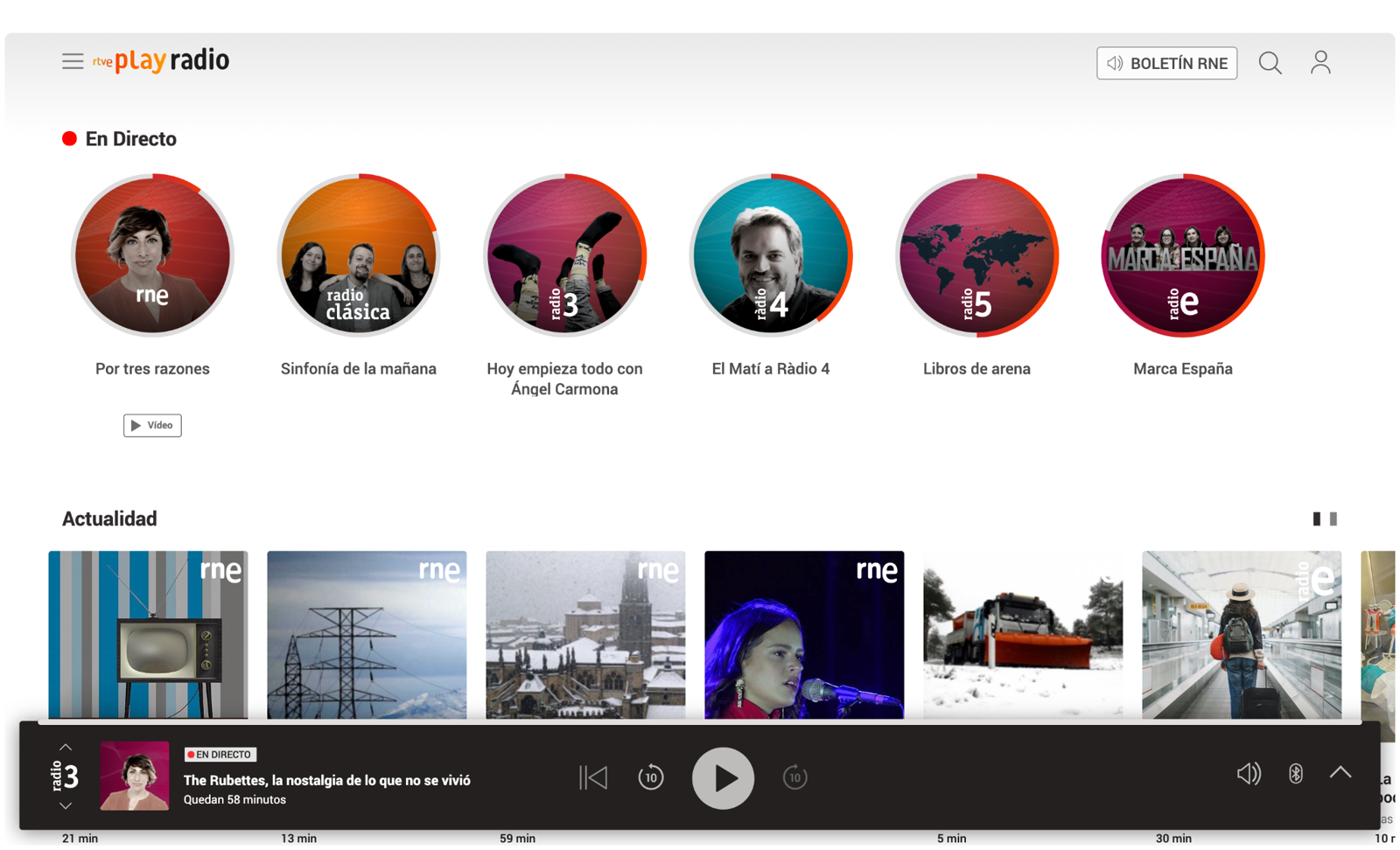
UI design for RTVE Play Radio’s desktop web app.
Cross-platform consistency could not rely on a visual guide alone. To make it sustainable over time, we defined a design system built around RTVE Play’s shared principles, patterns and components. The system turned experience and interface decisions into a common language for the teams.
We then brought that language into code by developing a reusable front-end component library. Each component was documented with its visual design and behaviour, giving design and development teams a single source of truth when building new functionality or improving existing features.
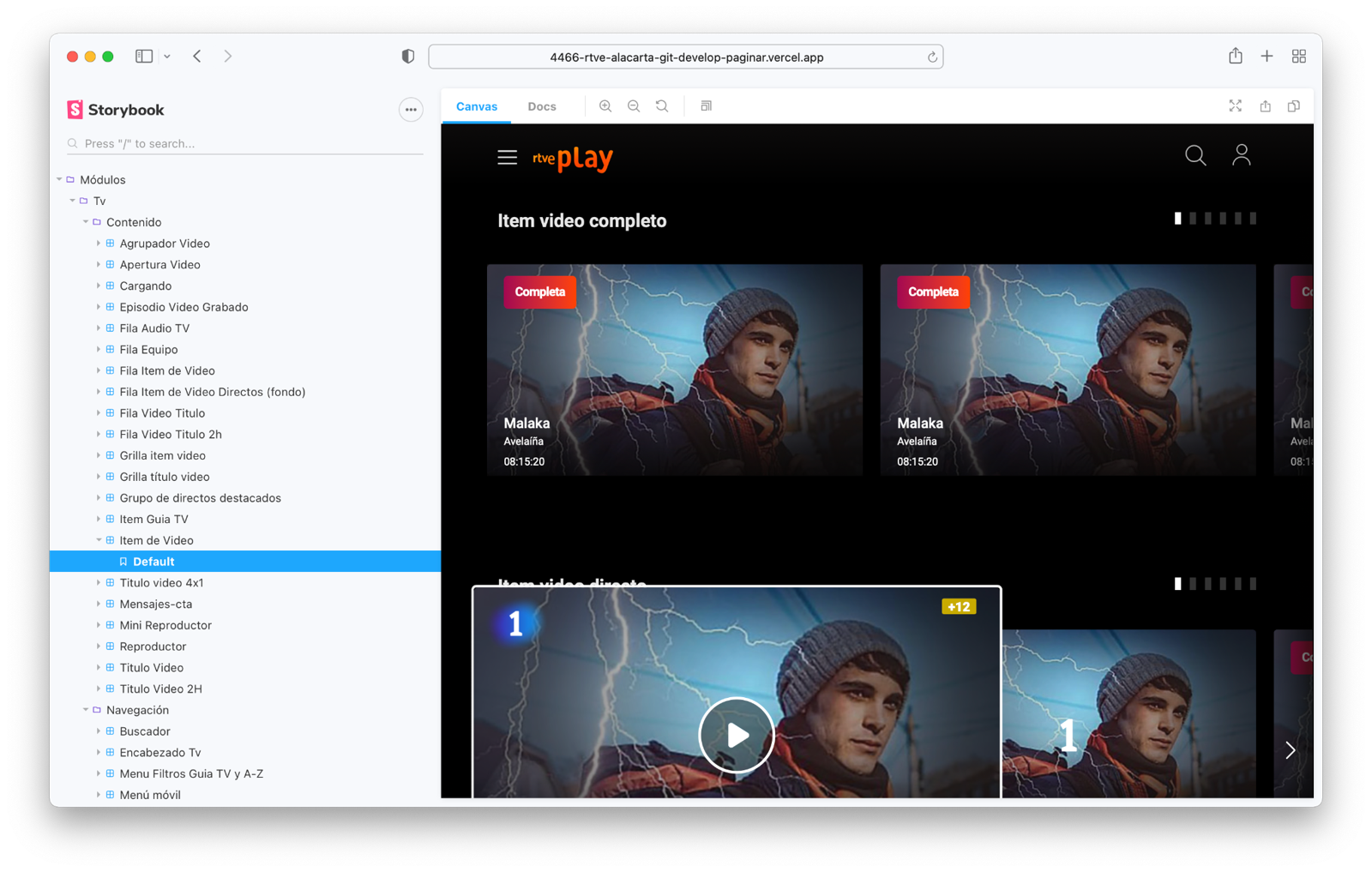
UI Components Library
Developing UI components and creating a library to document their visual design and behaviour. The library serves as a central resource of reusable elements, ensuring consistency across the app. It also provides clear implementation guidance so design and development teams can maintain a coherent experience and work more efficiently.
This technical layer ensured the work did not end with the launch of a set of screens. The library brought consistency to the interface, reduced the need to reinvent solutions and created a more efficient foundation for the platform’s future evolution.
The result
The outcome was a more unified RTVE Play experience across web, mobile apps, Smart TV/HbbTV and RTVE Play Radio’s different versions. Strategy, research, design and development came together in a single process that transformed a set of interfaces into a coherent product system, ready for the pace of a major media group.
For Paginar, this project embodies a way of approaching digital design: start with context and people, turn insights into experience decisions, and bring those decisions into the product through a reusable technical foundation. For RTVE, it resulted in a platform that is clearer for its audience and more robust for its teams.
- Client

- Partner
